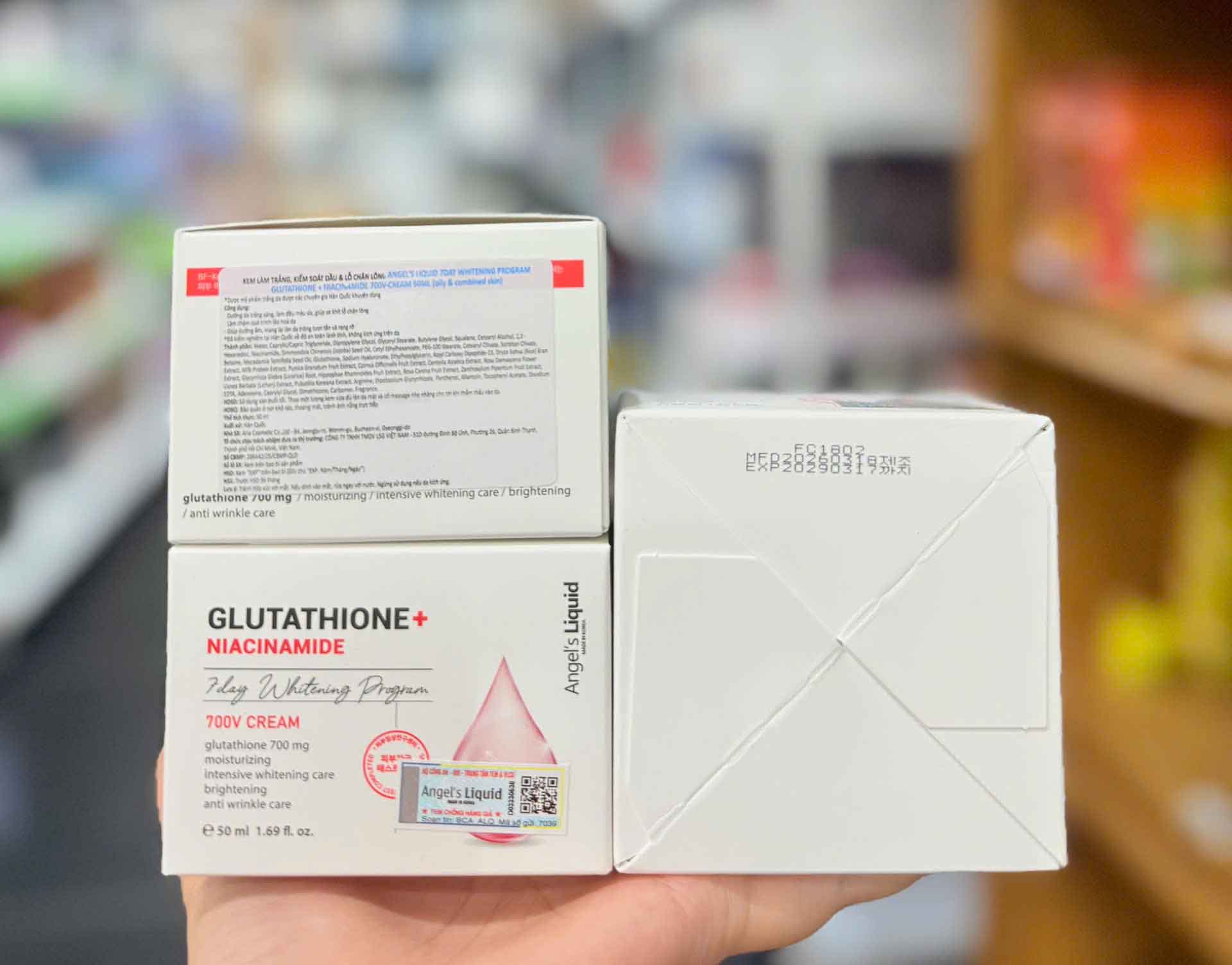
glutathione niacinamide 700 v cream Kem dưỡng Angel's Liquid 50ml Glow with Confidence ANGEL'S LIQUID
Description
Costa F, Toscani D, Chillemi A, Quarona V, Bolzoni M, Marchica V, et al

This may be due to copper's ability to enhance the expression of metalloproteinases (MMPs).16 MMPs normally regulate the degradation of collagen, and a specific one, MMP-1, may be responsible for the initiation of collagen fragmentation.17 Supporting this, a 2024 study noted that elevated MMP-1 levels appear to contribute to aging skin and that higher MMP-1 levels in mice led to:18 The loss and fragmentation of dermal collagen fibrils Contracted fibroblast morphology Reduced collagen production Increased expression of pro-inflammatory mediators Additionally, a 2016 study found that GHK-Cu significantly increased gene expression of MMP-1 and MMP-2 at the lowest concentration, which the studys authors considered to be one of the reasons the peptide was able to increase collagen and elastin production.19 So, what this could ultimately mean is that using too much GHK-Cu (or other copper peptides) may in theory increase the skins MMP-1 concentration above the levels involved in healthy collagen production, taking it into the collagen fragmentation and breakdown territory seen in older skin with naturally higher MMP-1 levels

And then theres compounded or wellness-marketed peptides, where evidence sometimes is a little bit lacking, standardization is missing, quality assurance seems to be a little bit weaker. Some experts have raised concerns about the safety of using emerging peptides that are still considered experimental

Shifts in gut microbiota composition in an APP/PSS1 transgenic mouse model of Alzheimer's disease during lifespan


